
Automating Business Partner Selection for Energy Distribution
How we built a digital platform that streamlined Pertamina Patra Niaga's multi-stage vendor selection process, from registration through approval.
Complexity Snapshot
About the Client
PT Pertamina Patra Niaga is one of Indonesia’s largest fuel distribution companies, operating an extensive network of commercial partners and business associates. Selecting the right business partners is critical to their operations — each partner must meet rigorous qualification standards before being approved to work with the company.
The Operational Challenge
The existing business partner selection process was labor-intensive and difficult to manage:
- Potential partners submitted registration documents via email, often in inconsistent formats.
- Pertamina staff had to manually collect, organize, and verify documents from each candidate.
- The evaluation involved multiple stages and multiple departments, with no centralized tracking.
- Status updates to candidates required manual communication via email.
- Revision requests and resubmissions created version control challenges.
- There was no single view of where each candidate stood in the evaluation pipeline.
As the volume of candidates grew, the process became increasingly difficult to manage without errors or delays.
Why This Was More Than a Registration Form
DMUT TOB was not simply a form for collecting vendor information. It had to coordinate different types of users, enforce document requirements, support several evaluation stages, handle revisions, communicate status changes, and preserve a reliable history of decisions and submissions. The system therefore had to represent the operational rules behind the process—not just digitize the first step.
- 1 External applicants
- 2 Registration and structured document submission
- 3 Document review and multi-stage evaluation
- 4 Revision, resubmission, notifications, and approval tracking
- 5 Management visibility and end-to-end audit trail
Our Solution
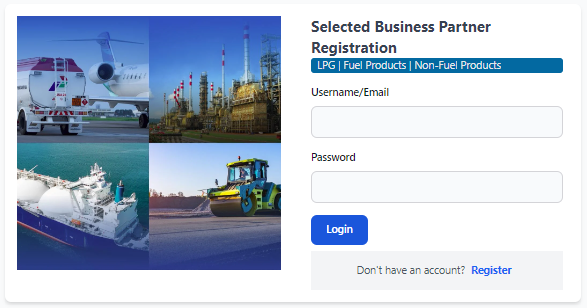
We developed DMUT TOB (Selected Businesses Partner Registration) — a web application that digitizes the entire partner selection workflow:
- Self-service registration: Candidates register directly through the platform, submitting their company information and required documents in a structured format.
- Structured document upload: The platform guides candidates through exactly what documents are needed, reducing incomplete submissions.
- Multi-stage evaluation: Pertamina staff evaluate submissions across multiple stages, with clear ownership and progression tracking.
- Automated notifications: Both candidates and evaluators receive timely notifications as status changes occur.
- Revision workflow: When documents need revision, the platform facilitates clear communication and tracks resubmissions.
- Status visibility: All parties can see the current status of each candidate in the pipeline.
The platform brings transparency and efficiency to a process that was previously managed through email and spreadsheets.
Outcomes and Evidence
The platform replaced a fragmented intake and coordination process with a single digital workflow. It gave applicants a clearer way to submit and follow up on their applications, while giving internal teams more consistent control over evaluation, revisions, approvals, and pipeline visibility.
| Before | After |
|---|---|
| Registration documents arrived through email | Applicants used a structured self-service registration flow |
| Review activities were coordinated manually | Evaluation moved through defined digital stages |
| Revisions created version-control challenges | Revision and resubmission activity was tracked in context |
| Status updates required manual follow-up | Status became visible to the relevant users |
| Management lacked one pipeline view | Authorized managers gained operational visibility |
| Process history was scattered | Submissions, revisions, and approvals formed an audit trail |
Evolution and Partnership
The platform was designed as a structured foundation that can support future workflow improvements and additional operational requirements as the qualification process evolves.
Technology
.NET · SQL Server
Interested In Our Services?
Whether you have a question about features, pricing, or anything else of relevance, our team is ready to answer all your questions.
Discuss Your Project